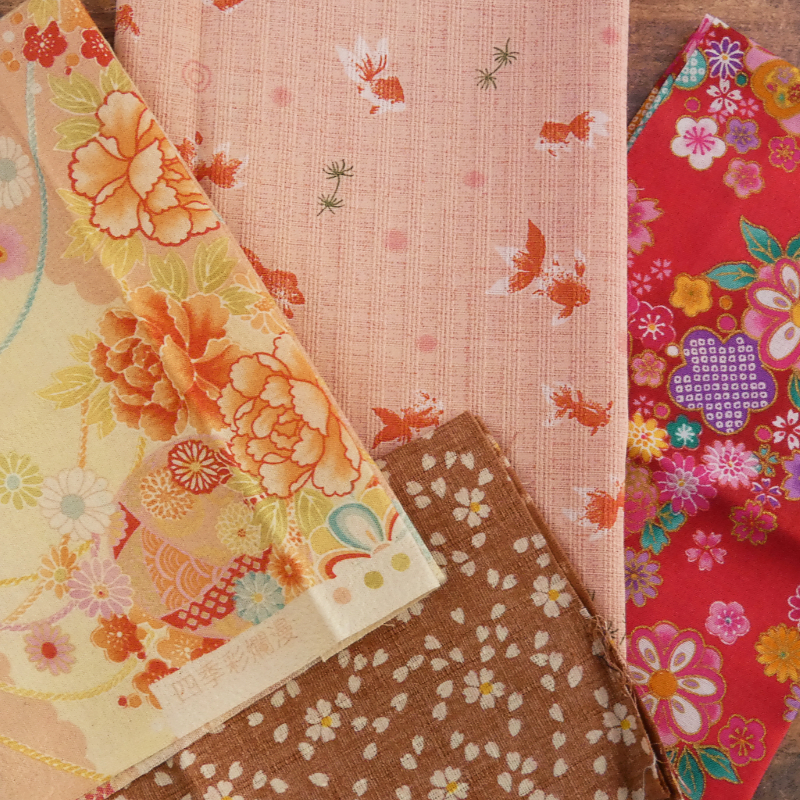
There's something so appealing about Japanese textiles. A simple piece of cotton can be beautifully patterned, pleasingly tactile and surprisingly versatile. When I'm in Japan, I always go shopping for fabric as I can't resist the gorgeous designs and colours.
Often, however, there's much more to it than initially meets the eye.
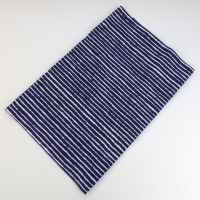
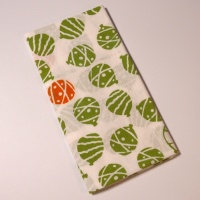
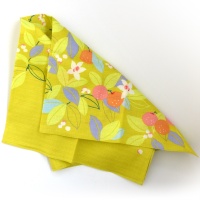
Take the humble tenugui. At first glance, it's simply a lightweight rectangular piece of cotton cloth, usually around 35cm wide and 90cm long. You might use one as a hand towel, kitchen cloth, wrapping cloth or even turn it into a little bag. But have you ever wondered why a tenugui is that particular shape?
The answer takes us back to the way traditional Japanese cloth was woven.
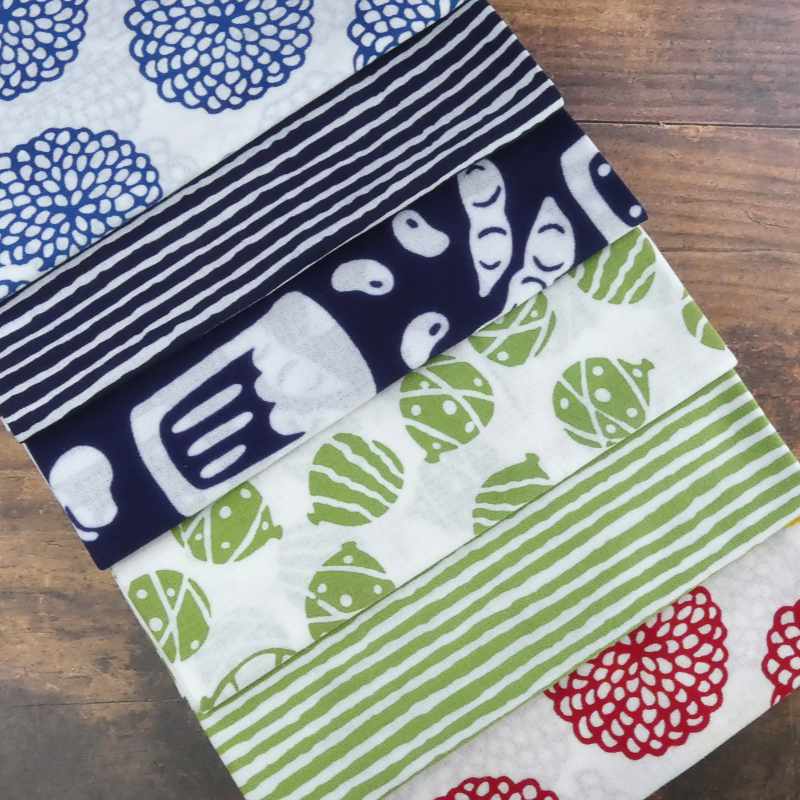
For centuries, Japanese textile makers worked with relatively narrow lengths of fabric, and this had an influence on everything from the construction of kimono to the dimensions of everyday textiles. What looks like an arbitrary size to modern eyes can actually be a clue to a much older way of making and using cloth.
*
And the tenugui is just the beginning...
Look a little closer at Japanese textiles and you'll find a fascinating world of regional traditions, natural fibres, weaving techniques and extraordinarily skilled dyeing and printing. Some of these traditions are centuries old, while others have evolved into something that feels completely at home in modern Japan.
That's what makes Japanese textiles so interesting: tradition doesn't have to mean old-fashioned. The knowledge and craftsmanship of the past can continue to inspire beautiful, useful things today.
Why is a tenugui that shape?
A tenugui is a wonderfully simple thing: a piece of cotton cloth, usually around 90 cm long and 35 cm wide, with no fuss or unnecessary details. But have you ever wondered why it is that particular shape?
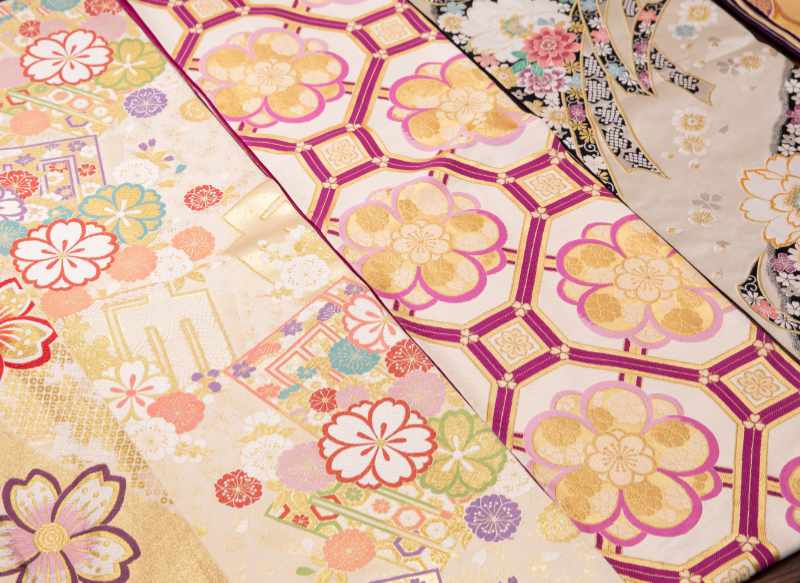
The answer takes us back to a long tradition of weaving narrow lengths of cloth in Japan.
Traditional Japanese textiles were often woven in long, relatively narrow pieces rather than on the much wider looms we might picture today. This shaped the way cloth was used and nowhere is this more apparent than in the traditional kimono. Rather than cutting a garment from a broad piece of fabric, as we might with Western clothing, a kimono is constructed from long, straight pieces of cloth, with the design working around the width of the fabric.
In other words, the cloth comes first.
This tradition of narrow-width weaving helps explain the familiar proportions of the tenugui. Its long, slim shape isn't an arbitrary design choice, it belongs to a much older way of making and using cloth in Japan. The same approach also makes a tenugui wonderfully versatile. It can be wrapped, folded, tied, worn, used as a towel or simply draped wherever a useful piece of cloth is needed.
Even the unfinished short edges have a practical purpose. Without sewn hems, water can pass easily through the fibres and the cloth dries quickly, particularly useful for something intended to be used, washed and used again.
So what looks like a very simple rectangle is actually the result of a long relationship between how cloth was woven and how it was used.
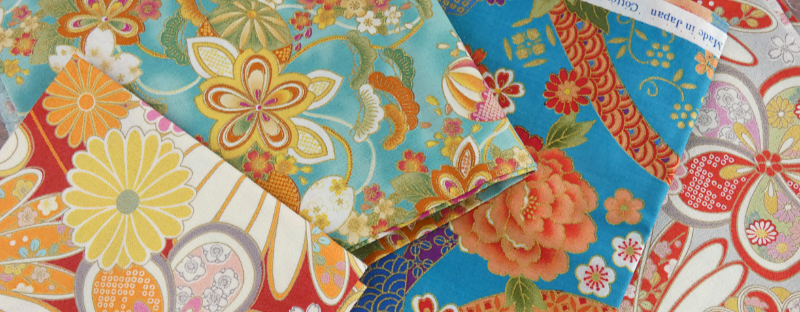
And that leads us to another question: If Japanese textiles were traditionally made in these long, narrow lengths, what were they actually made from?
What was Japanese cloth made from?
If the shape of Japanese cloth tells us something about the way it was woven, the fibres tell us another part of the story: where it came from.
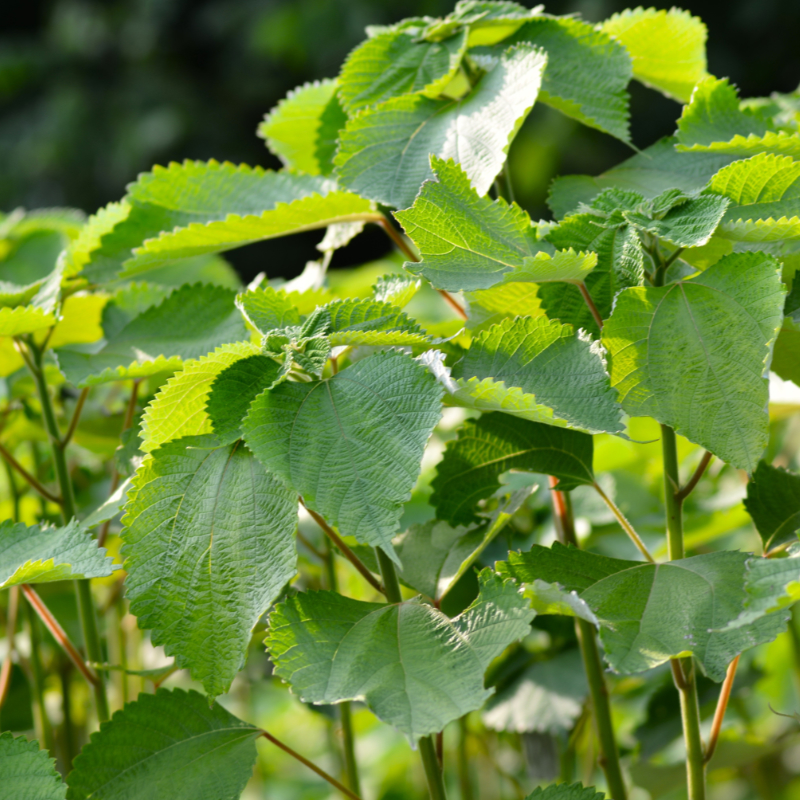
Long before cotton became widely available in Japan, people made cloth from fibres gathered from the plants around them. Hemp and ramie were important sources of textile fibre, while other plants, including paper mulberry, wisteria and Japanese linden, were also used. In Okinawa, the leaves and stems of the Japanese fibre banana became the basis for bashōfu, a distinctive textile that is still made today.
These weren't simply substitutes for cotton. Different fibres have different qualities and local climate and landscape played a part in determining what could be grown, gathered and turned into cloth. Over time, particular regions developed their own textile traditions around the materials and techniques that suited them.
Ramie, for example, has a particularly long history in Japan. In snowy parts of Niigata, it became the basis for textiles such as Echigo-jofu and Ojiya-chijimi. The region's heavy snowfall even became part of the process: freshly woven cloth could be spread out on the snow, where sunlight reflected from the snow helped bleach and brighten the fibres.
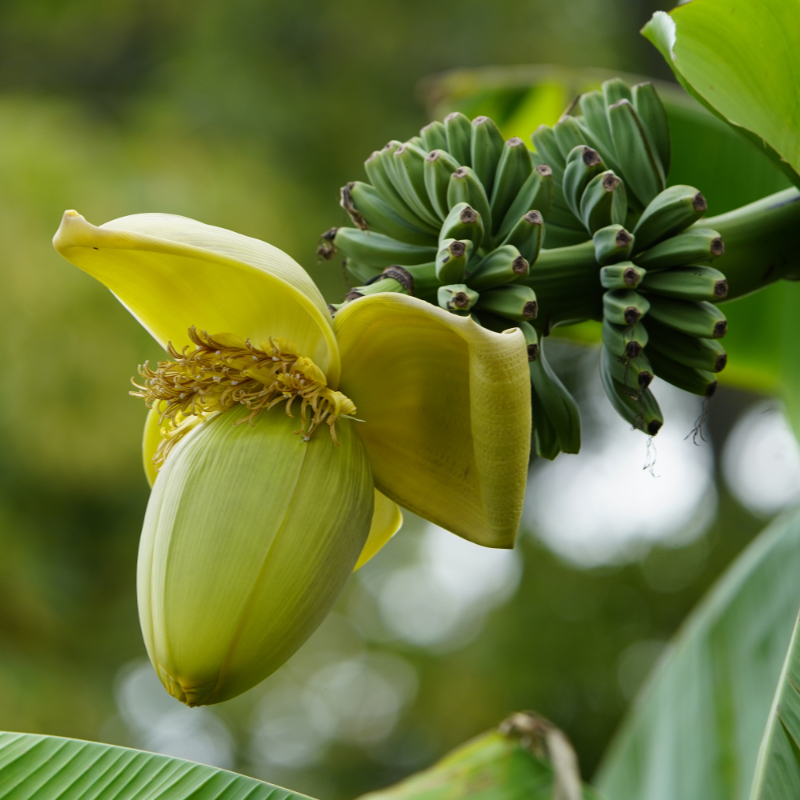
Then there is bashōfu, the traditional Okinawan textile made from fibre extracted from the Japanese fibre banana. It is a lovely reminder that Japanese textile history isn't just about cotton, silk and the familiar fabrics of mainland Japan. Across the country, people have developed ways of turning the plants around them into useful cloth.
Today, we tend to think about plant-based fibres in the context of modern questions about synthetic materials, the way we use resources and textile waste.
*
That doesn't mean traditional textiles were created with today's ideas about sustainability in mind - they weren't. But it does give us a reason to look again at some of the knowledge behind them.
There is something rather appealing about the idea that, when we're faced with new problems, we don't always have to look only towards new materials and technologies. Sometimes the past has a few interesting ideas tucked away in it too!
And, of course, cotton eventually became hugely important in Japan, bringing with it a whole new chapter of regional textile traditions.
When cotton changed the picture
Cotton eventually changed the textile landscape in Japan. It became widely established from around the late 16th century, and because it was softer and more versatile than many of the fibres that had been used before, it quickly became an important material for everyday clothing and household textiles.
But there is an interesting detail here. When we talk about Japanese cotton textiles today, 'Japanese' doesn't usually mean that the cotton itself was grown in Japan. Modern Japan imports most of its raw cotton, while the spinning, weaving, dyeing and finishing can still take place within Japan. So a piece of fabric can have a distinctly Japanese character because of the way the fibre is processed once it arrives.
And what happened to it varied enormously from one region to another.
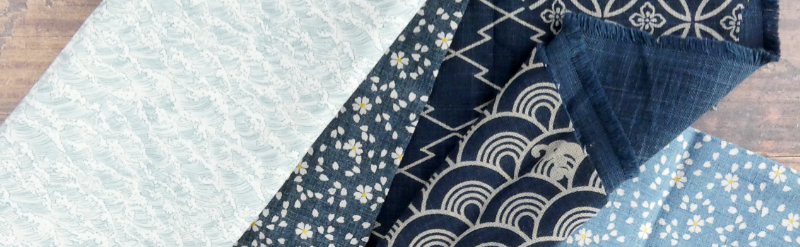
Take Banshu-ori, from the Nishiwaki area of Hyogo Prefecture. This traditional cotton textile is known for yarn-dyeing where the yarns are dyed before they are woven, rather than colouring the finished fabric afterwards. The pattern is therefore built into the cloth itself. Stripes and checks emerge from the careful arrangement of differently coloured threads on the loom.
It's a deceptively simple idea. Look closely at a checked piece of fabric and you realise that every little intersection has been planned before the fabric even exists. The weaver isn't putting a pattern onto the surface; they're creating it thread by thread.
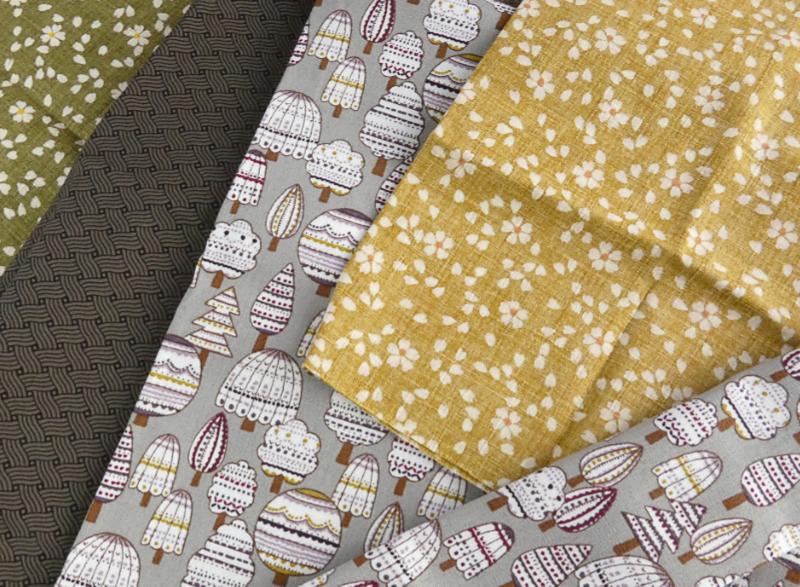
Then there is Kurashiki in Okayama Prefecture, where cotton became closely connected with the local landscape. Parts of the area had been reclaimed from the sea but the salty soil wasn't particularly suitable for growing rice. Cotton, however, proved much better suited to the conditions and its cultivation helped give rise to a thriving textile industry. Over time, the region became known not just for growing cotton but for the whole process of turning it into cloth, from spinning and weaving to dyeing and sewing.
Today, Kurashiki is particularly associated with canvas and denim, showing just how far a regional textile tradition can evolve. What began with a crop and a particular landscape eventually became a much broader culture of making.
And there are many more examples across Japan: Kurume, Bingo, Enshu, Chita and Senshu all developed their own cotton-textile traditions, each with its own techniques, materials and history.
The epitome of luxury
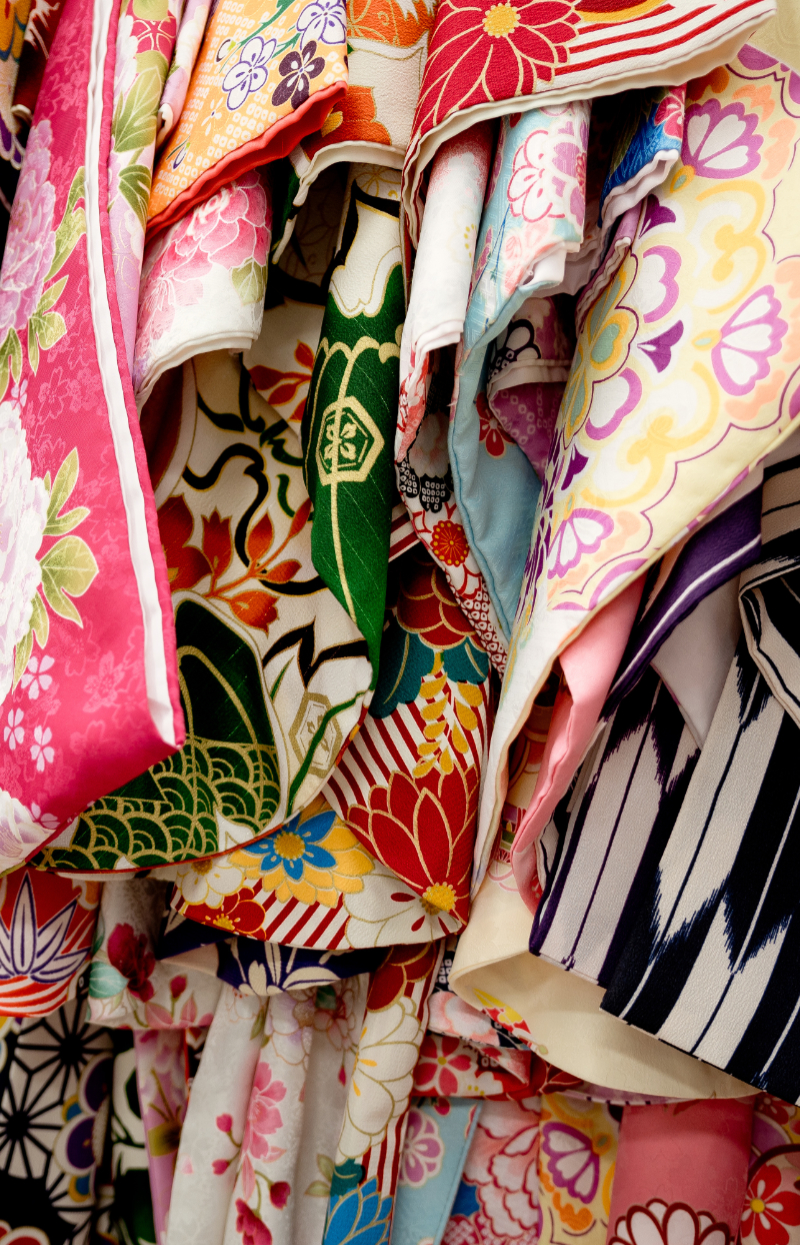
Silk tells a slightly different story. It has a long and important place in Japanese culture, particularly in fine clothing, formal kimono and ceremonial dress. Its beauty and luxurious feel made it a prized material and traditional silk production still survives in Japan today, although on a much smaller scale than in the past.
So Japanese textiles aren't defined by a single 'Japanese' material. They are shaped by the relationship between fibre, place, people and technique and perhaps that is what makes the subject so fascinating.
Once we start looking closely at the cloth itself, there is another question waiting to be asked:
How were all those beautiful patterns created?
*
The cleverness behind the pattern
We've talked about the fibres that become Japanese textiles and the regions that developed their own ways of working with them. But there is another layer to the story: the patterns themselves.
Look closely at a piece of Japanese fabric and you might see stripes, checks, flowers, waves or wonderfully intricate repeating designs. Some are woven into the cloth itself, while others are created through dyeing, printing or resist techniques.
Take yarn-dyed cotton, for example. Instead of weaving a plain piece of cloth and then printing a pattern onto it, the yarns are dyed first. The coloured threads are then arranged on the loom so that the pattern emerges as the fabric is woven.
It's rather clever when you think about it. The pattern isn't sitting on the surface of the fabric, it's actually built into it.
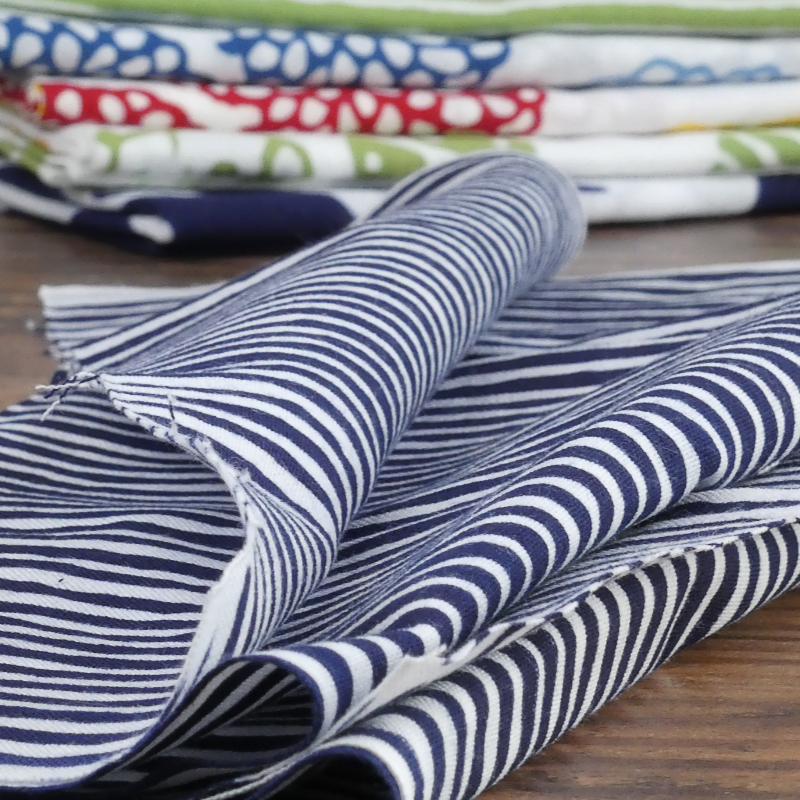
And then there are the techniques used to put patterns onto cloth after, or during, the dyeing process. Traditional Japanese stencil dyeing, known as katazome, uses carefully cut paper stencils to control where the dye reaches the fabric. The stencil is placed onto the cloth and a resist paste is applied, protecting selected areas. When the fabric is dyed, the protected parts remain the original colour, revealing the pattern.
Some stencil designs are extraordinarily intricate. The stencil has to be strong enough to withstand repeated use, yet delicate enough to create fine details. And when a pattern is repeated along a long length of fabric, everything has to line up exactly.
With chusen, a traditional technique particularly associated with tenugui, dye is poured through a stencil onto the fabric. A separate stencil can be used for each colour, meaning that a multi-coloured design requires remarkable accuracy. One of the lovely things about chusen is that the dye passes through the fabric, so the pattern appears on both sides creating a cloth that has no 'wrong' side, rather than simply being printed onto the surface.

Then there is shibori, where the fabric itself becomes part of the design process. Cloth is folded, twisted, stitched, tied or bound before it is dyed, creating areas where the dye can and cannot reach. When the bindings are removed and the fabric is opened out, the pattern is revealed.
There is something wonderfully tactile about these techniques. They aren't simply ways of decorating fabric; they involve manipulating the cloth, the thread, the dye and the pattern together.
*
And this is perhaps one of the things I find most fascinating about Japanese textiles: the beauty isn't only in the finished pattern, it's in the cleverness and skill of how that pattern was made.
Once you start looking at textiles in that way, even a small piece of printed cotton becomes much more interesting. You begin to notice the precision of a repeated design, the way colours meet, the texture of the fabric and the tiny variations that tell you something about how it was made.
And this brings us right up to the present day, because these aren't simply techniques preserved in museums. Japanese makers are still using traditional textile skills to create things that feel completely at home in modern life.
Tradition meets modern design
This is where all those threads of the story come together rather beautifully.
In Yokohama, Hamamonyo creates tenugui and textile goods using Yokohama nassen, a traditional style of multi-colour textile printing with a history stretching back around 120 years. The technique developed alongside Yokohama's silk and scarf industry, and involves using separate stencils for different colours.
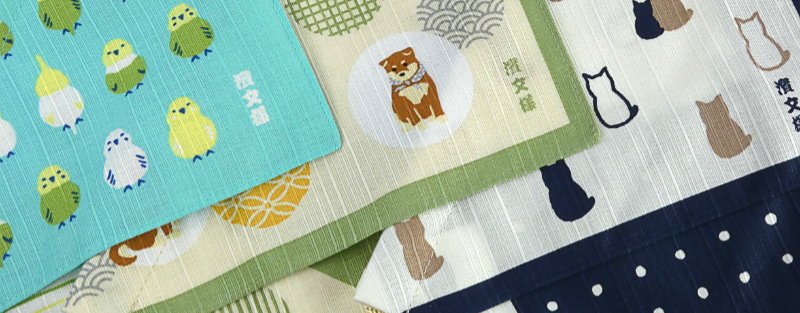
That means a colourful design isn't simply printed onto the fabric in one go. Each colour has its own part to play, and the stencils have to be positioned with great precision so that everything lines up properly. Temperature and humidity can even affect the printing process.
And yet, look at the finished products and they don't necessarily look like something from a textile museum.
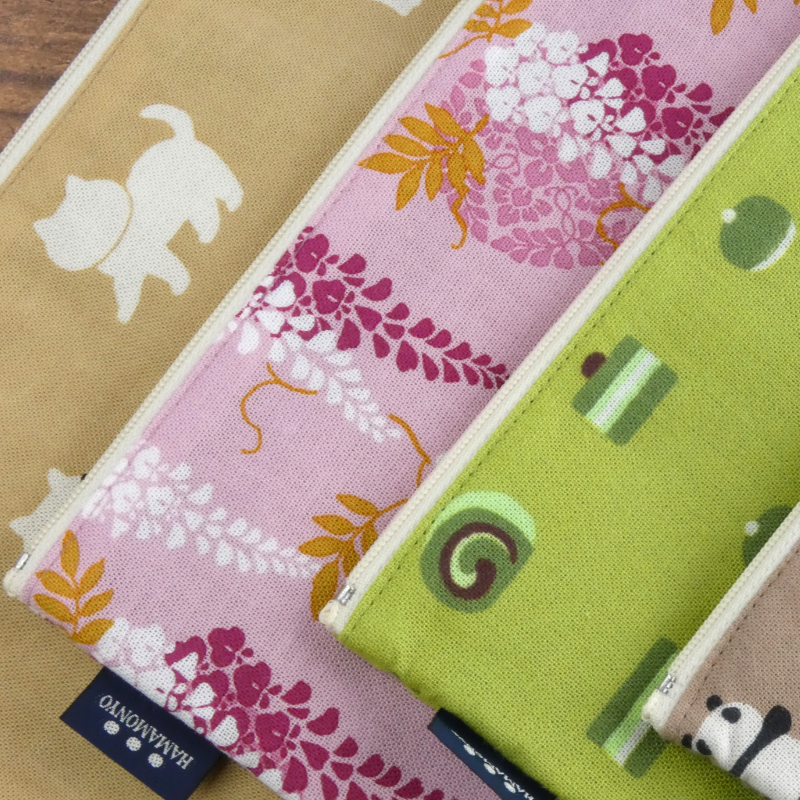
Hamamonyo's designs are full of gentle colours, charming characters, flowers, seasonal motifs and the sort of kawaii details that feel completely at home in contemporary Japan. Their small purses and zip-up bags turn this traditional textile skill into something wonderfully ordinary: something to carry your little essentials, pop into a handbag or give as a thoughtful gift.
This is one of the things I find so appealing about Japanese design. Tradition doesn't have to mean old-fashioned.
*
A traditional technique can continue to evolve, with new colours, new patterns and new uses, while the skill behind it remains recognisably part of the story. The result doesn't have to look 'traditional' to have a connection with tradition.
And there is another detail that makes these little bags particularly lovely. The cotton fabric is incredibly soft and tactile - something that is much easier to appreciate when you have one in your hands than when you're looking at a photograph on a screen. The combination of that beautifully soft cloth, carefully printed pattern and practical little shape makes them feel both special and very usable.
It's a good reminder that textile traditions survive not simply because people preserve them, but because people find new reasons to use them.
A technique developed for one generation can be picked up by another and given a completely new expression. The patterns may change, the products may change, and the way we use them may change but the knowledge doesn't have to disappear.
And perhaps that is the most interesting thing Japanese textiles have been telling us all along.
Tradition, woven into everyday life
From the humble tenugui to intricate woven fabrics and beautifully printed cotton, Japanese textiles have a fascinating way of connecting the everyday with generations of knowledge and craftsmanship.
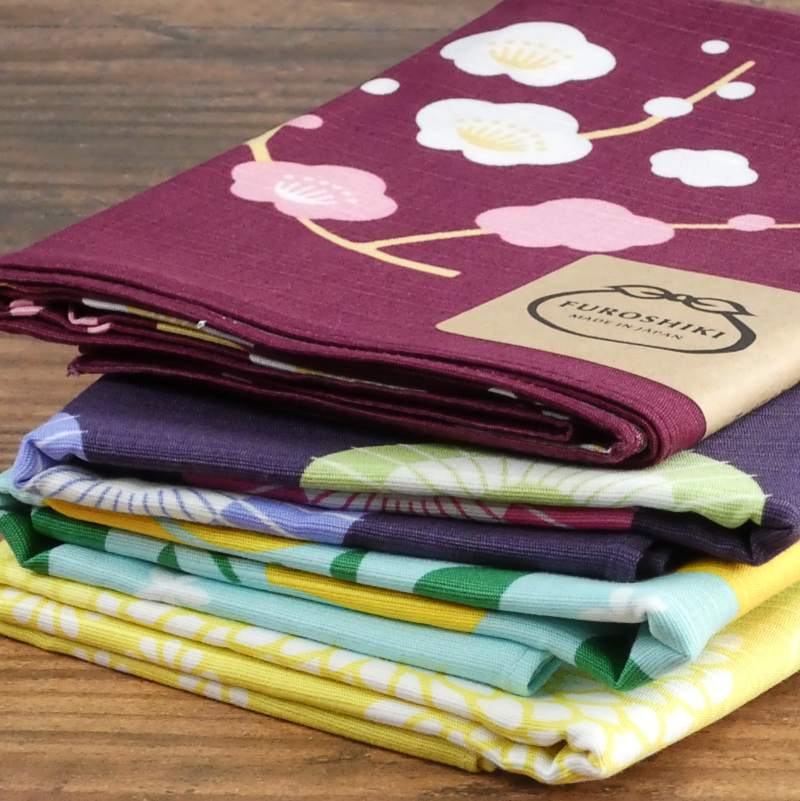
We've followed the story from the shape of the cloth, through the plants and fibres that became it, to the regional traditions, weaving techniques and ingenious ways of creating patterns. And perhaps that's what makes these textiles so interesting: there is usually a story behind the thing that looks simple.
Japanese textile traditions aren't simply relics of the past. They continue to change, adapt and find their way into modern life, sometimes in ways that are instantly recognisable as traditional, and sometimes in the form of something as cheerful and contemporary as a little kawaii purse.
So next time you pick up a piece of Japanese fabric, perhaps you'll find yourself wondering: Why is it that way?
There might be rather more to the answer than you expect.
*
Textiles at Hatsukoi
*

*
*


*


*


*


*