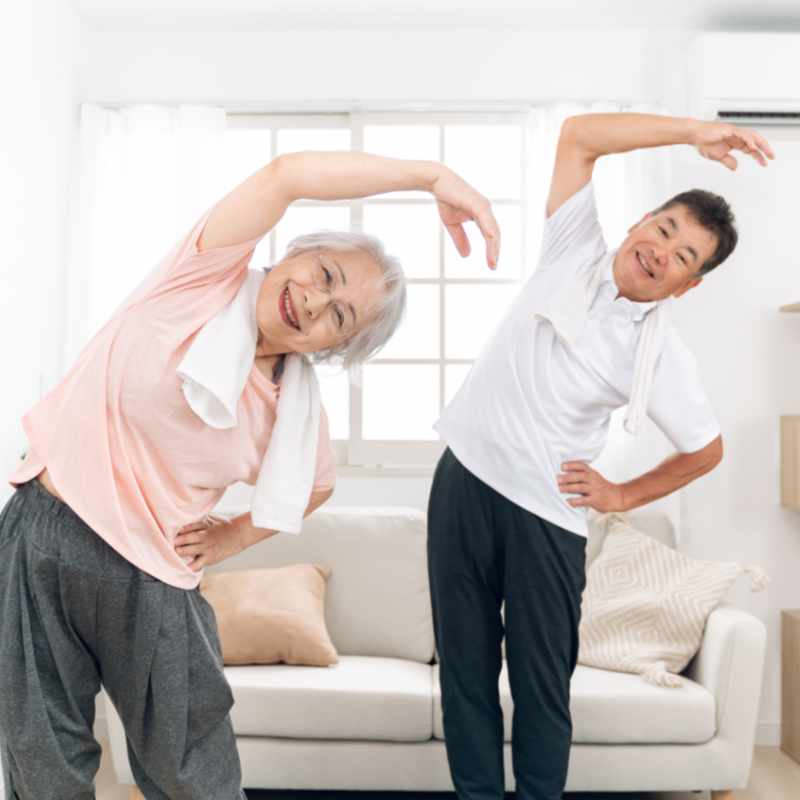
Imagine turning on the radio first thing in the morning and joining millions of people across Japan for a few minutes of gentle exercise... This is the modern tradition of Rajio Taisō, a short, easy to learn, exercise routine broadcast on Japanese radio every morning to get the nation started.
You don’t have to be a fitness fanatic or even particularly fit. There’s no special equipment, no going to the gym, you don’t even have to change your clothes - just three minutes of stretching and movement to set you up for the day ahead.
I’ve been doing Rajio Taisō ‘dai-ichi’ (number 1) almost every day for several years now and it’s surprising how quickly it just becomes a part of your routine.
What exactly is Rajio Taisō?
The name Rajio Taisō (ラジオ体操) literally means ‘radio exercises’. In Japanese, ‘rajio’, written in katakana as ラジオ, is the English word ‘radio’ and ‘taisō’ or 'Taisōu' means 'exercise' and is written in kanji as 体操. Normally when people refer to Radio Taisō, they’re meaning Rajio Taisō Dai-ichi (ラジオ体操第一), Radio Exercise Number One.
Rajio Taisō Dai-ichi is a three minute routine of low-impact calisthenic exercises, performed to music with spoken instructions. It was designed to move and stretch different parts of the body for an all round gentle workout.
The routine starts with arm raising and breathing, progresses to torso twists and bends, even a few jumps and finishes with a brief cool-down. Since it only takes a few minutes and isn’t too strenuous, it is intended to be something that almost anyone can do pretty much anywhere.
Originally it was designed for broadcast over the radio for people to join in with first thing in the morning but, being available now on the Internet and easy to learn, you can have the benefit of a short exercise routine any time of day.
The origins of Rajio Taisō
The idea of radio exercises wasn't actually born in Japan. Back in the 1920s, the Metropolitan Life Insurance Company of the United States was broadcasting health exercises by radio. Officials in Japan became interested in the idea of using this new radio technology to promote public health and so the Japanese government developed its own version.
In 1928, the Ministry of Communications' Postal Life Insurance Bureau, working with the Japan Broadcasting Corporation (NHK) and the Ministry of Education, created a programme called Kokumin Hoken Taisō or 'National Health Exercise'. It was broadcast for the first time from Tokyo Central Broadcasting Station on 1 November 1928.
The original idea was to create exercises that were easy enough for everyone, young or old, men or women, and something that could be done indoors or outdoors without special equipment. The ambition was essentially to use the brand-new mass medium of radio to help an entire nation become healthier.
The version we recognise today, however, is really a Shōwa-era creation, introduced in 1951 after earlier versions had come and gone. Earlier versions were revised several times, including a post-war version in 1946 that proved too complicated, and the current Rajio Taisō Dai-ichi was introduced in May of 1951. A more vigorous exercise routine known as Rajio Taisō Dai-ni (Number 2) was introduced the following year but it is Number 1 that most of us know and love.
From the radio to everyday life
For most Japanese people, Rajio Taisō is something they encounter early in life. The little radio exercise routine has become part of the school day, instilling a habit that some keep up into adulthood. It has become a cultural ‘muscle memory’ where you only need to hear the opening chimes of that cheerful music to know what’s coming next.
To this day, people join in with Rajio Taisō at community events, sports days, social gatherings and in the school holidays. It's a fun way to meet up and join in with a simple routine and a way to start the day together.
The association with school summer holidays is so strong that Rajio Taisō attendance cards have been distributed to children across Japan since 1952. Children collect a stamp each morning they take part, sometimes with prizes for attendance and all helping to turn three minutes of exercise into a daily ritual.
In fact, Japan Post Insurance itself says that recognition of Rajio Taisō across the general population remains exceptionally high, some 96.9%, in a 2021 survey. Sadly, only 11.7% of people surveyed said they did it at least once a week but it shows how the exercises are still there in the background ready to call on if you need to relax in a hotel room or to have a quick stretch on a long journey.
Even though Rajio Taisō began in 1953, it’s more than just a nostalgic Showa era tradition. The exercises are still broadcast at 6.30am on Japanese radio. It’s performed at schools, shrines and temples, in public parks and some companies also still hold up the tradition as a way to kick the day off.
Japan Post Insurance actively encourages its own employees to take part and supports other companies that want to introduce workplace sessions. An annual summer tour visits locations throughout Japan during July and August and is broadcast nationally.
It may take people back to their school days but it’s still a very current part of Japanese culture.
A little movement really does count
The original Japanese idea of Rajio Taisō was very much about public health. The exercises were designed to be simple enough for ordinary people to do, without equipment or special facilities, and the radio made it possible to reach huge numbers of people at one time. The Japanese government describes Rajio Taisō as having played a long-running role in promoting good health.
And modern research backs up the broader principle behind it. The WHO's current guidance is quite encouraging for people who aren't keen on formal exercise: Any amount of physical activity is better than none and replacing sedentary habits with even light-intensity movement provides valuable health benefits.
It’s good to know that you don't have to run five miles or spend an hour at the gym to benefit from moving your body! Even small amounts of physical activity count towards a more healthy life.
What are those three minutes of Rajio Taisō actually doing?
In simple terms, the exercises take the body through a variety of movements: Reaching, bending, twisting, raising the arms and moving the legs. After lying in bed overnight or sitting still through the day, it's a gentle way to get the body moving again. It is energetic enough to raise your heart rate a little and get the circulation going but we’re not talking about a full cardio workout so there’s no need to change your clothes or take a shower afterwards.
It’s also nice to focus your mind away, just for a few minutes, from what might be coming up through the day and to take a little time for yourself before tackling the day’s events.
There's good evidence behind the broader idea that physical activity is associated with better mental wellbeing, including a reduction in the symptoms of anxiety and depression, and with improvements in cognitive health and sleep. Everyone knows they should exercise more but maybe these simple three minutes could help build a routine that feels refreshing and healthy.
I’m a terrible sleeper and there are many mornings when I don't particularly feel like exercising. Sometimes I really have to force myself, but my experience is that if I can manage three minutes of Rajio Taisō, by the time the music stops I feel more awake and ready to face the day.
What is that catchy little tune? Why does it sound so... school piano?
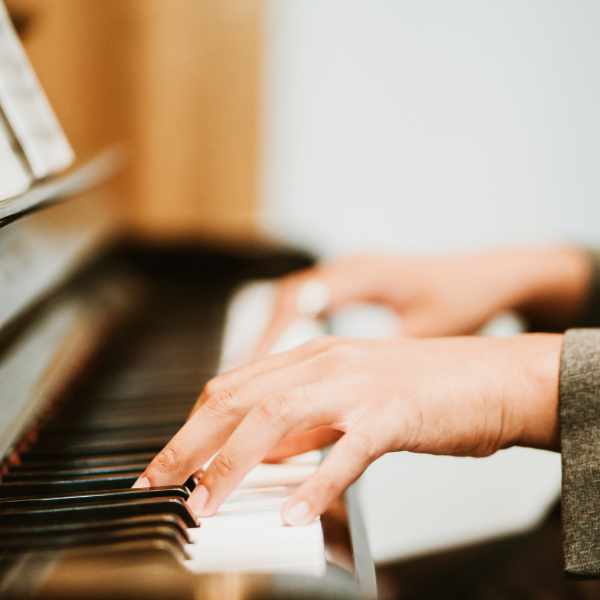
Doesn’t that happy little melody remind you of the teacher playing the piano at school? Well, there’s a reason for that…
The music that you hear while doing Rajio Taisō Dai-ichi is so distinctive and memorable that you only have to hear it a few times for it to become instantly recognisable. It has a wonderfully jaunty, slightly old-fashioned 'Right everyone, hands up!' quality that almost takes you through the movements by itself.
Once you’ve learned the exercise routine you don't really need someone standing at the front showing you what to do, the music itself becomes the instructor.
It won’t surprise you to know that the music for the routine was composed specifically for Rajio Taisō Dai-ichi. It was writtin in 1951 by established composer Tadashi Hattori (服部正) as a contemporary piece to accompany the movements.
Back in the 1920s, the original Japanese organisers had a very practical reason for wanting music to go with their exercise routine. The exercises were to be transmitted by radio, so along with verbal instructions, the music provided a steady rhythm for people to follow. One of the principles when the original exercises were developed was that they should be enjoyable and could be performed in rhythm with the music.
When the familiar modern Dai-ichi was created in 1951, the relationship between the movements and the music was taken particularly seriously. The committee wanted something that would appeal to ordinary people and specifically considered how well the music matched the exercises.
So that cheerful, purposeful school piano isn't incidental - it's effectively part of the instruction. The music and exercises were very much developed together, with the intention of making the movements enjoyable and easy to perform in rhythm.
Listening carefully and you’ll notice that along with the regular rhythm it has clear phrases and little musical cues that correspond with the movements. That's why you can become so familiar with it; hearing the opening notes immediately makes you want to start moving!
From exercise to community
One of the loveliest things I have found about Rajio Taisō is that everyone can join in.
A nice example of how it has been adopted by communities is from July 2026. A Rajio Taisō group in Yokohama was started in a local park in 2025 with just a few people attending. But by the middle of the following year numbers had grown to more than 100 participants on busy mornings. The core group is older people in their 60s to 80s, but children, teenagers and younger adults have also joined in. People arrive early to chat with the friends they've made there and, to encourage inclusivity, the organisers deliberately describe it as something you can attend at your own pace.
Japan already has a strong tradition of community activities, from neighbourhood festivals and group games to hobbies and outdoor pursuits. Public parks and other shared spaces become places where people meet regularly, often with an activity providing the excuse to get together. In that sense, Rajio Taisō is a particularly good fit. It’s simple, free and accessible to almost everyone.
I love the fact that this creates an intergenerational connection. Adults aren’t only exercising with other adults, nor are children confined to groups with other kids. They're often sharing the space: children, parents, grandparents, neighbours and friends.
More recently, the familiar routine has also been adapted for people who exercise from a seated position, including people with limited mobility and wheelchair users. The movements can be modified while keeping the familiar music and rhythm, so people can take part alongside everyone else rather than being excluded from the activity.
Perhaps all this is part of the enduring appeal of Rajio Taisō. There is no competition and nobody is keeping score. Whether you're standing in a school playground, exercising in a park with your neighbours or following the routine from a chair, you're simply joining in.
Want to give it a try?
Of course, you don’t have to go out or join a group to take part in the fun, you can find the routine online and have a go from the comfort of your own living room. Here is the version I follow in the mornings before having my first coffee. Give it a go and see what you think!
It’s become so familiar to me that I’m able to do a few of the stretches by myself before getting into bed! Here's a version that shows the movements adapted for someone who is seated:
You can find plenty of other versions on YouTube, including the more strenuous ‘Dai-ni’ (number two) version.
Whether you're exercising alone, in a small group or as part of a larger event, you can know that you're adding to your general wellbeing whilst being connected to a wider community of people, all with the same goal in mind.
Rajio Taisō isn't about becoming super-fit or conquering your morning. It's just a tiny nudge to get the blood moving and start the day.