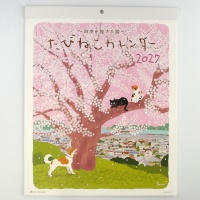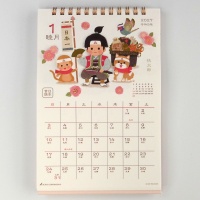
If you enjoyed my first collection of Japanese folk tales, I'm delighted to bring you six more! Japan has a wonderfully rich storytelling tradition, with tales that have been passed down through generations. Some are amusing, some are magical, and others have a touching or unexpected twist.
So, let's continue our journey through Japanese folklore with the next six stories. I hope you enjoy reading them as I really enjoyed discovering the stories behind the illustrations in my 2027 Japanese Folk Tales calendar. From mysterious visitors and magical treasures to acts of kindness and unexpected adventures, there's plenty to capture the imagination.
much as I enjoyed writing about them. We begin with an extraordinary underwater adventure that has a rather unexpected ending!
1. Urashima Tarō and the Dragon Palace
Once upon a time, there lived a kind-hearted fisherman named Urashima Tarō. One day, while walking along the beach, he spotted a group of children teasing a little sea turtle. Feeling sorry for the poor creature, Tarō chased the children away and helped the turtle safely back into the sea.
A few days later, something extraordinary happened. A large turtle came to his house but was no ordinary visitor. It had come to thank Tarō for his kindness and invite him to visit the magnificent Dragon Palace beneath the waves.
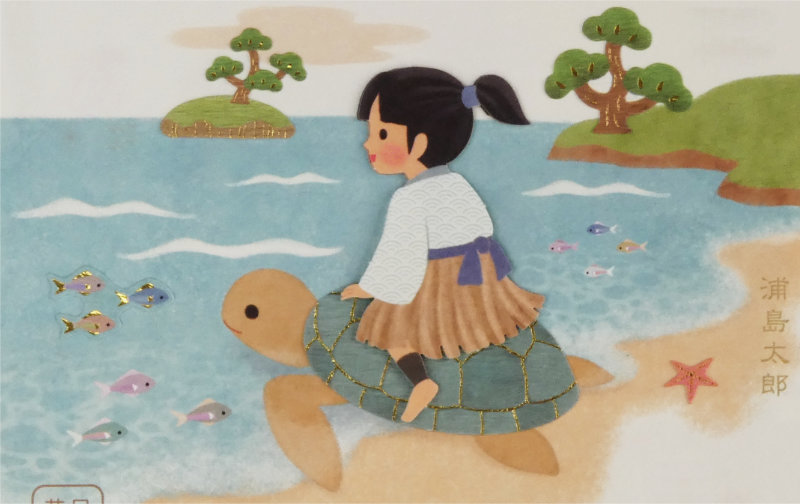
Curious about this underwater world, Tarō climbed onto the turtle's back and they journeyed down into the depths of the ocean.
There, he discovered Ryūgū-jō, a splendid palace with beautiful gardens and rooms decorated with all manner of treasures. He was welcomed by the lovely sea princess Otohime, who was delighted to meet him. Tarō was treated like an honoured guest, with lavish feasts, music and dancing sea creatures. It was a magical place and he was having the time of his life!
But after what seemed like just a few days, Tarō began to think about home. He missed his family and wondered how his elderly parents were getting along without him. Eventually, he told Otohime that he must return to his village.
Although sad to see him leave, the princess gave him a beautiful, mysterious box called a tamatebako as a parting gift. She asked him to keep it safe but gave him one very important instruction: whatever happened, he must never open it.
Tarō climbed back onto the turtle's shell and was carried up to the shore. But when he arrived, he realised that something was terribly wrong. His village had disappeared, the familiar houses were all gone and nobody recognised him. He soon discovered that more than 300 years had passed while he had been enjoying his stay at the Dragon Palace. Everyone he had ever known was long gone!
Devastated and bewildered, Tarō sat down with the mysterious box. Perhaps there was something inside that could explain what had happened? Unable to resist his curiosity, he lifted the lid.
Slowly a cloud of white smoke drifted out and in an instant Tarō's youthful face grew wrinkled, his hair turned white and he became a very old man. All the years that had passed without him had finally caught up with him!
And so ended the extraordinary adventure of Urashima Tarō, a fisherman whose kindness had taken him to a magical kingdom but whose journey home had cost him everything he had left behind.
2. Princess Kaguya and the tale of the bamboo cutter
Once upon a time, there lived an elderly bamboo cutter named Taketori no Okina and his wife. They were a poor, childless couple who spent their days gathering bamboo in the forest.
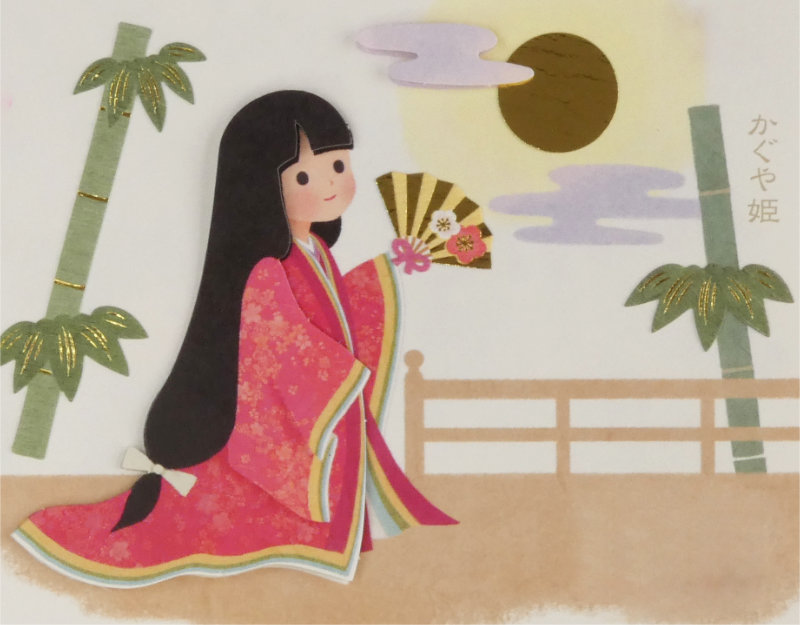
One day, the old man noticed an unusual glow coming from inside a bamboo stalk. Curious, he cut it open and discovered a tiny baby girl, no bigger than his thumb, shining with a beautiful, moon-like light!
Overjoyed, he took the little girl home to his wife and together they decided to raise her as their own daughter. They named her Kaguya-hime, meaning Princess of Radiant Light.
From that day onwards, the bamboo cutter seemed to enjoy extraordinary good fortune. Whenever he cut into a bamboo stalk, he discovered gold nuggets and precious treasures hidden inside. Before long, the once-poor couple had become very wealthy.
As the years passed, their tiny baby grew into a young woman of extraordinary beauty. News of her loveliness spread far and wide and soon noblemen from across the land came hoping to win her hand in marriage.
Five particularly determined suitors caught her attention but Kaguya-hime had no wish to marry any of them, so she devised a clever plan. She gave each man an almost impossible task, asking them to bring back a precious object that was incredibly difficult to find. One was sent searching for a legendary stone begging bowl, another for a magical jewel from a dragon's neck!
The suitors tried many tricks and schemes to complete their missions, but none succeeded. One by one, they returned empty-handed and Kaguya-hime politely turned them away.
Eventually, word of her beauty reached the Emperor of Japan himself. He too became captivated by the princess and asked her to marry him. But even an Emperor couldn't win her heart! Kaguya-hime refused his proposal, gently explaining that she could never become his wife.
As the summer drew to a close, the princess became increasingly sad. One evening, she finally revealed a secret to her adoptive parents: she was not from Earth at all, but a princess from the Moon. Her time on Earth was coming to an end and soon her celestial family would return to take her home.
Her parents were heartbroken and, when the Emperor heard the news, he immediately ordered 2,000 guards to protect her. Surely, he thought, such a mighty army could prevent the Moon people from taking her away!
But on the night of the full moon, a magnificent procession descended from the heavens in a celestial chariot. The Moon people possessed such extraordinary powers that the Emperor's guards were completely useless. The doors opened by themselves and nothing could prevent the princess from leaving.
Before departing, Kaguya-hime wrote a farewell letter to the Emperor and, as a gift, left him a small bottle containing a potion, the elixir of immortality. She then put on a beautiful feather robe, which caused her to forget all the memories of her earthly life. And with tears in their eyes, her adoptive parents watched their beloved daughter being carried away into the night sky.
The Emperor was devastated when he read her farewell letter. What use was immortality if he could never see Kaguya-hime again? He decided he would rather live a mortal life and ordered his servants to take the elixir and her letter to the highest mountain in the land and burn them.
That mountain was Mount Fuji and legend has it that the smoke from the burning elixir still rises towards the heavens to this day.
And so the beautiful Moon Princess returned to her celestial home, leaving behind a tale of love, longing and loss.
3. The Tengu's magic geta
Once upon a time, there lived a poor boy who cared very much for his elderly mother. Sadly, she had fallen ill and the family had very little money to pay for the medicine she needed.
One day, feeling sad and desperate, the boy went out hoping to borrow some money from his wealthy uncle, Gonzo. But his uncle was a mean and selfish man who refused to help. Disappointed and worried about his mother, the boy made his way home through the forest.
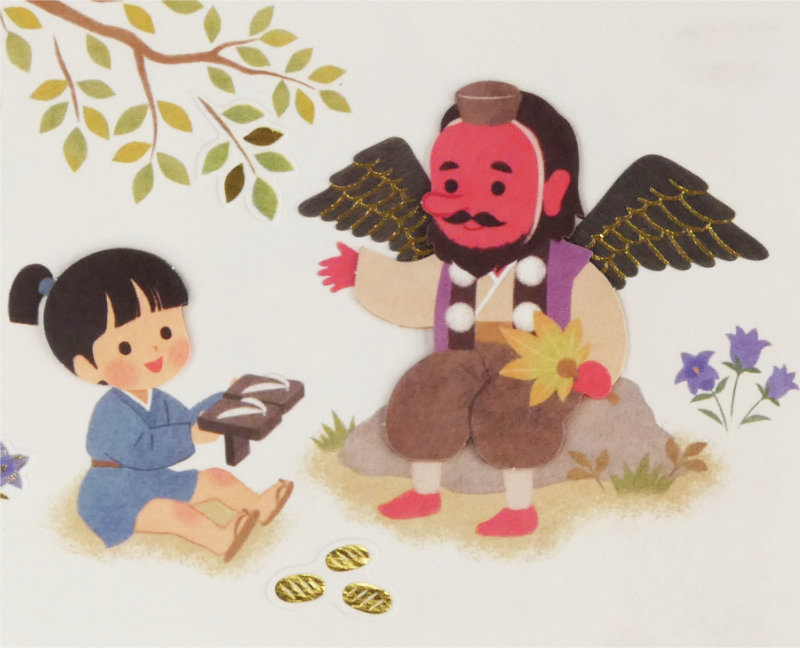
As he walked, he encountered a strange-looking creature with a bright red face, a long nose and a pair of wings. It was a Tengu, a mysterious mountain spirit from Japanese folklore!
The Tengu noticed the boy's sad expression and asked what was troubling him. After hearing his story, he took pity on the young fellow and presented him with an unusual gift: a pair of magical wooden sandals called ipponba-geta.
Geta are traditional Japanese shoes made from wood with a padded fabric thong. But unlike conventional wooden sandals, which have two supporting teeth underneath, these had just one! The Tengu explained that, although the shoes would be tricky to walk in, whenever the boy stumbled and fell while wearing them a gold coin would magically appear.
But there was a catch. Every time he fell, he would become a little shorter. The Tengu warned him not to overuse their magic or he might shrink away to almost nothing!
The boy was delighted and carefully tried out his new sandals. Sure enough, when he took a tumble, a shiny gold coin appeared! He was thrilled but remembering the Tengu's warning, he decided not to get carried away.
He took the precious coin home and was able to buy medicine for his mother, who soon began to recover.
But news of the magical sandals eventually reached his uncle Gonzo. When he discovered that the boy could produce gold simply by falling over, his eyes lit up with excitement. He immediately demanded to borrow the precious geta.
The boy tried to explain the Tengu's warning, but his greedy uncle wasn't interested. He snatched the sandals and hurried home, eager to make himself a fortune.
Once inside, he spread a large cloth across the floor to catch the coins, put on the magical geta and began deliberately throwing himself about.
Thump! Clink! Another fall, another gold coin!
Before long, gold coins were piling up all around him. Gonzo was beside himself with delight. He would soon be the richest man in the land!
But he was so busy watching his growing fortune that he failed to notice something. With every fall, he was becoming smaller and smaller.
Meanwhile, the boy began to worry about his missing sandals and went to investigate. When he arrived at his uncle's house, he found gold coins scattered everywhere, but there was no sign of Gonzo.
Searching through the enormous pile of treasure, he spotted the magical geta... and a little bug nearby.
To his astonishment, the bug was none other than his uncle, who had shrunk so much that he was now little more than a tiny insect!
The boy gathered up the gold and recovered his precious sandals. He returned home to his mother and together they lived comfortably ever after.
And as for Uncle Gonzo? Well, perhaps he learned his lesson – although it was rather difficult to tell what a tiny little bug was thinking!
4. The tale of the treasure gourd
Gourds, a type of squash or pumpkin, feature in many Japanese folk tales so here's a particular example featuring a 'bottle' gourd, two helpful visitors and a rather unfortunate bargain!
Once upon a time, there lived a poor old man who seemed to have very little luck in life. No matter how hard he tried, good fortune never seemed to come his way.
One day, hoping to improve his lot, he visited a temple and prayed to Kannon, the goddess of mercy. He stayed there for seven days and seven nights, praying for a little good fortune.
On the eighth morning, he set off home, feeling that his prayers hadn't made much difference. But as he walked down the path from the temple, he heard something rolling along behind him.
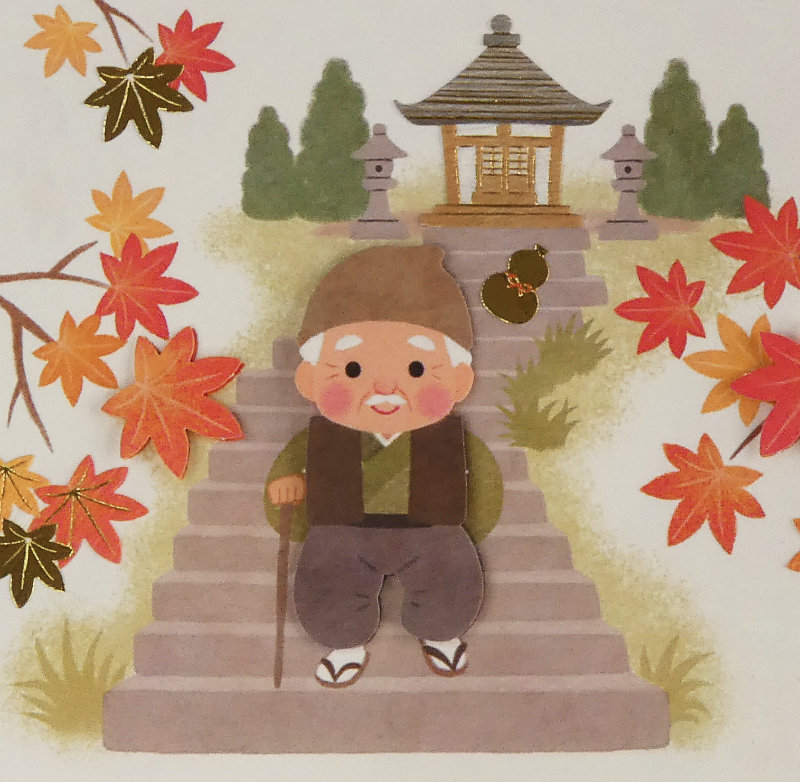
He turned around and spotted a small bottle gourd tumbling down the path! Whenever he stopped, it stopped too, and whenever he started walking, it followed him again.
'What a curious thing!' he thought. He picked it up and gave it a closer look. Suddenly, two tiny boys popped out!
They introduced themselves as Kinshichi and Magoshichi, explaining that Kannon had sent them to help him.
'Just tell us what you'd like, and we'll provide it!' they promised.
The old man was delighted. He asked for a little sake and some delicious dumplings, and the two boys promptly produced them from inside the gourd. What a wonderful surprise!
Before long, the old man was enjoying all sorts of delicious food and drink and he was so pleased with his good fortune that he began sharing it with the people in his village. His magical treasure gourd soon became the talk of the town and everyone wanted to see its amazing powers.
One day, a horse trader came along and was astonished by what he saw. He was so impressed by the gourd that he offered the old man seven fine horses and 300 gold coins in exchange for it.
The old man was reluctant to part with his precious gift, which had come from Kannon herself. But the two little boys whispered that he should accept the offer, so at last he agreed.
The delighted trader hurried off with his new treasure, intending to present it to the local lord and earn himself even greater rewards.
But when he arrived at the lord's castle and tried to demonstrate the gourd's magical powers, nothing happened! He shook it and tried again but not a single morsel of food appeared. The lord was furious at being tricked and ordered the hapless trader to leave.
Meanwhile, the old man was enjoying his newfound wealth, with his two little helpers still by his side. At last, his prayers had been answered and he lived happily ever after.
5. The grateful crane
In this next story, a beautiful act of kindness and a mysterious visitor lead to a promise that proved impossible to keep.
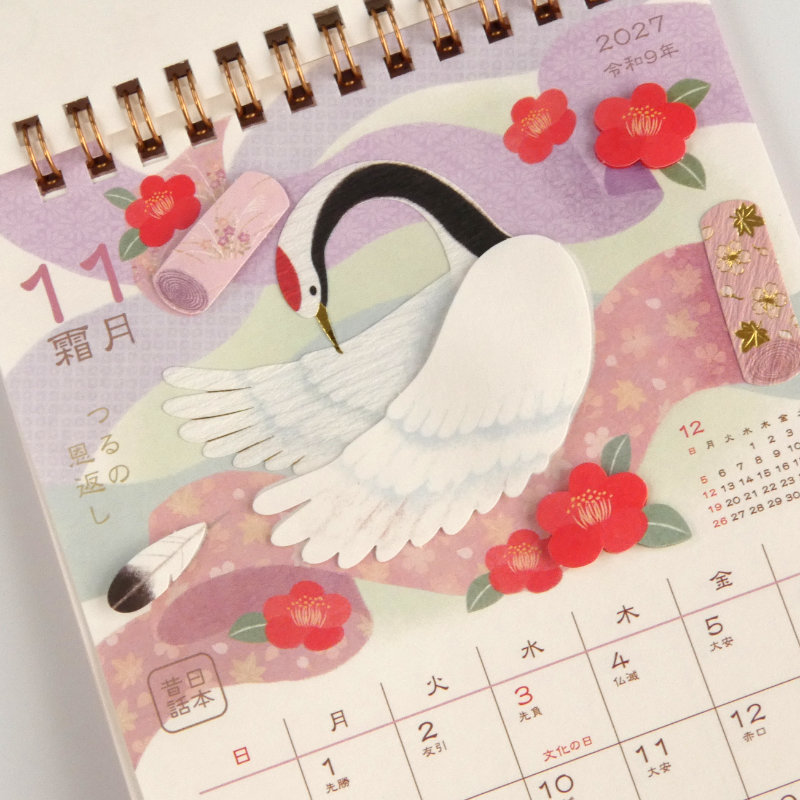
Once upon a time, on a cold winter's day, a poor farmer was walking home when he spotted a beautiful white crane caught in a hunter's trap. The poor bird was struggling desperately to free itself, so the farmer carefully released it. The crane stretched its great wings, gave a grateful flutter and flew away into the snowy sky.
Later that evening, there came a knock at the farmer's door. Standing outside was a beautiful young woman, looking cold and tired. She asked if she might have shelter for the night and the kind farmer welcomed her in.
The young woman was so grateful for his hospitality that she stayed and before long the two fell in love and married.
Although they were happy together, life was difficult and money was often scarce. One day, the wife suggested that she could weave some beautiful cloth for her husband to sell at the market. She asked him to provide her with a small room where she could work but insisted on one very important condition: he must never look inside while she was weaving.
The farmer agreed and his wife disappeared into the room to begin her task. For seven days and seven nights, he heard the gentle sound of her loom but she would not let him enter.
At last, she emerged carrying a magnificent roll of finely woven cloth. It was so beautiful that the farmer was able to sell it at the market for a very good price. Suddenly, their fortunes began to improve!
Before long, his wife returned to the weaving room to make another piece. Again, she asked him not to look inside and again he promised.
But as the days passed, the farmer became increasingly curious. How could his wife produce such exquisite cloth? And why did she always seem so exhausted when she emerged?
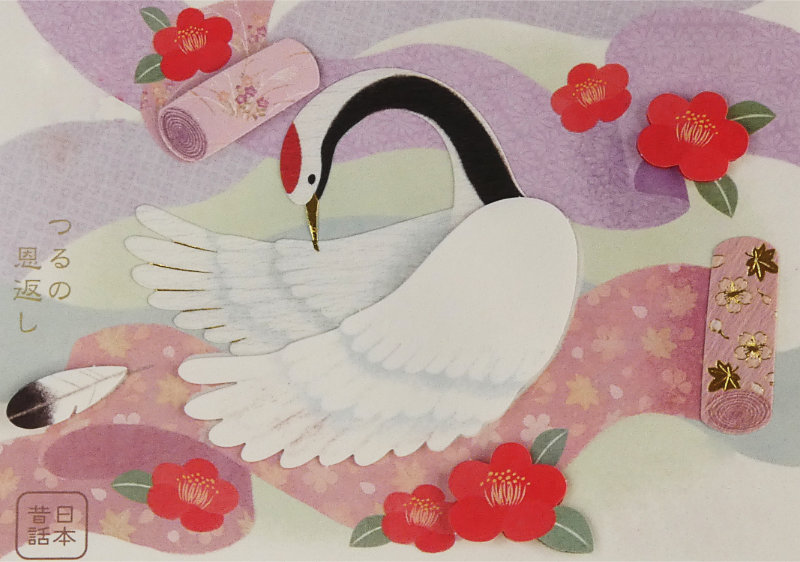
Unable to contain his curiosity any longer, he crept up to the door and peered through a little crack. What he saw left him speechless.
His wife was nowhere to be seen. Instead, a beautiful white crane sat at the loom, plucking feathers from its own body and weaving them into the cloth. The poor bird had grown terribly thin and worn out from its efforts and the farmer suddenly realised that this was the very crane he had rescued from the hunter's trap all that time ago.
Just then, the crane noticed him watching. Its secret was out and there was no way it could remain in human form any longer.
The bird finished weaving its final piece of cloth, then returned to the farmer and revealed that it had come to repay him for his kindness. But now that he had discovered its true identity, the creature could no longer stay.
With a heavy heart, the crane spread its great white wings and flew away into the winter sky, leaving the farmer alone with the beautiful cloth and the memory of his mysterious wife.
And so the farmer learned that some acts of kindness are repaid in the most extraordinary ways but that love and trust are precious things that should never be taken for granted.
6. Kasa Jizō or Straw hats for Jizō
This last story takes place on a snowy New Year's Eve when an act of kindness brings an unexpected reward.
Once upon a time, in a snowy village in Japan, there lived a poor old man and his wife. They were kind-hearted people, but life was difficult and they had very little money.
With New Year approaching, they were hoping to buy some mochi (rice cakes) to celebrate but times had been particularly tough their purse was almost empty. The old man decided to make some straw hats, known as kasa, to sell at the market, perhaps he could earn enough money to buy a few treats for the New Year. His wife waved him off with a smile, wishing him luck and reminding him to wrap up warmly, as snow was forecast.
The old man set off carrying his five handmade hats. But as he walked, the snow began to fall more and more heavily. When he finally reached the market, he called out to passers-by, hoping someone might buy his wares but sadly, since it was so cold, people were rushing home and nobody was interested. As the afternoon wore on, he realised he would have to return to his wife empty-handed.
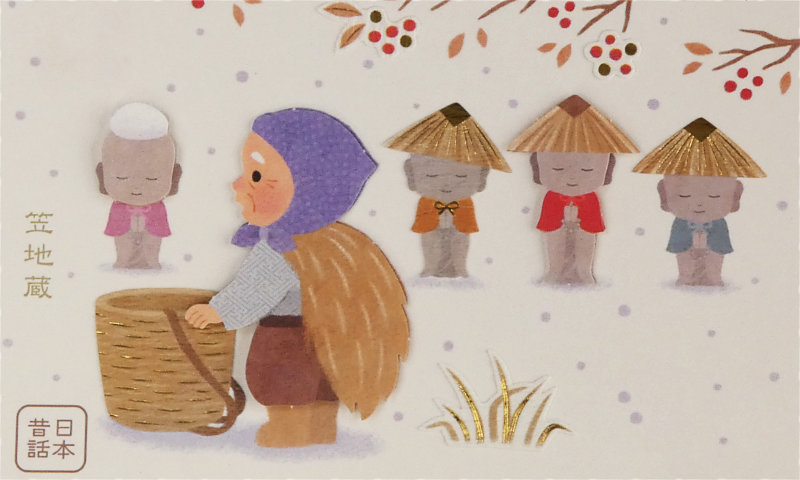
Feeling disappointed, he trudged back through the snow. On the outskirts of his village, he came across six stone Jizō statues standing in a row beside the road. Snow had settled on their heads and shoulders, and they looked terribly cold.
'Oh, you poor things!' he exclaimed. 'You must be freezing out here!'
Feeling sorry for the little statues, he brushed away the snow and carefully placed one of his straw hats on each of the first five. But when he reached the sixth statue, he had no hats left. He thought for a moment, then took off the cloth he was wearing around his own head and gently tied it around the last Jizō.
'There,' he said. 'I hope that keeps you warm!'
And so with nothing left to sell and no hat to protect his own head, the old man continued home through the falling snow. His wife was surprised to see him return so early and noticed immediately that he had no hats with him. When he explained what had happened, she listened carefully and smiled.
'Well, you did a very kind thing,' she said. 'Never mind about the rice cakes. We can manage without them.'
The old couple settled down for the night, content in the knowledge that they had done something good, even if their New Year celebrations would be rather modest. But later that night, they were woken by some very strange noises outside. They heard voices singing in the distance, growing louder as they approached:
'Where is the old man's house? We've come to thank him for his kindness!'
Then came a tremendous THUMP! as something heavy was placed outside their door.
A little shaken, the old man and his wife crept over and opened the door. To their astonishment, they spotted the six Jizō statues walking away through the snow! Each one was wearing its new head covering and behind them on the doorstep lay a wonderful collection of gifts. There were bags of rice, delicious food, vegetables, warm clothing and plenty of mochi rice cakes for the New Year!
The old couple were overjoyed. Thanks to the kindness of the little stone statues, they would have everything they needed for a happy New Year.
A little Japanese magic...
And that brings us to the end of our twelve Japanese folk tales. What a wonderful collection of adventures, magical encounters, curious characters and unexpected endings.
I love how these traditional stories weave together humour, imagination and little lessons about kindness, courage, gratitude and the consequences of our actions. Some may make you smile, others might tug at your heartstrings, but each offers a glimpse into Japan's rich storytelling heritage.
I hope you've enjoyed discovering them as much as I have. And next time you turn the page of your Japanese folk tales calendar, perhaps you'll see the illustrations in a slightly different light, knowing the little stories behind them!
Japanese calendars at Hatsukoi